
Building a High-Performing Security Operations Centre (SOC)
by Graham Bennett

A high-performing Security Operations Centre (SOC) isn’t built once—it’s continuously refined. To stay ahead of evolving threats, organisations must embrace ongoing optimisation and continuous improvement. This article explores key strategies to enhance your SOC’s effectiveness, strengthening threat detection and response, maximising security investments, and ensuring your SOC not only defends against cyber risks but also aligns with business objectives, delivers measurable ROI, and enhances overall security posture.
How to continuously improve your SOC
Keeping your SOC at the top of its game requires regular upkeep, evaluation, and fine-tuning. Here are some essential actions to take to make sure you’re getting maximum protection from your SOC.
Regular assessments of your SOC’s effectiveness
The first step to improving any aspect of your operations is to assess its current performance. Is it the most exciting part of levelling up your SOC? No. But at the rate that cyber threats are growing more advanced and wide-ranging, you can’t afford not to size up your SOC’s effectiveness on a regular basis.
Consistent and frequent assessments of your SOC’s capabilities, including its tools, processes, and personnel, will help you identify any new vulnerabilities, knowledge gaps, and parts of your posture that need to be shored up.
Implementation Tips
- Schedule quarterly SOC assessments using a standardised evaluation framework like the NIST Cybersecurity Framework or the MITRE ATT&CK framework
- Create a cross-functional assessment team including SOC analysts, IT staff, and management
- Develop a scoring system to quantitatively measure improvements over time
- Document findings in a centralised dashboard to track progress
Don’t forget to include these core areas when carrying out these assessments:
- Threat detection and response: Evaluate your SOC’s ability to detect and respond to security incidents quickly, including how well your triaging and incident response processes work in practice. How long does it take for the team to respond to a potential security issue? Is there any delay in notification or alert delivery?
- Technology and tools: Assess the efficiency of your SOC’s security technology stack, including SIEM systems, intrusion detection systems, and threat intelligence platforms. Make sure that each tool not only works well in itself, but also integrates and communicates effectively with other tools to facilitate proper cohesion within your SOC.
- Process and procedures: Walk through your SOC’s standard operating procedures, incident response plans, and escalation processes and verify that they’re well-defined, up-to-date, and effectively implemented across the entire team. Check that these processes are properly resourced and are consistently executed as expected.
- Reporting: Assess any metrics and reporting mechanisms your team uses to measure SOC performance, especially any KPIs that focus on incident response times, false positive rates, and overall security posture.
- Compliance: Ensure that the SOC’s operations align with relevant industry standards, regulatory requirements, and best practices. These kinds of rules and governance guidelines change often, so don’t let your SOC fall behind.
Creating a high performance SOC team
Your SOC is only as good as the people who run it. Therefore, it’s crucial to hire and train staff with the appropriate skills and experience. Watch out for skills gaps in your team.
Evaluate the expertise, training, and skill sets of SOC personnel to ensure they have the knowledge and capabilities they need to effectively respond to emerging security threats.
Additionally, you should ensure that your staff has the necessary certifications. In general a SOC should have the below roles, skills and qualifications:

Implementation Guide:
- Create individual development plans for each SOC team member based on their role and experience level
- Implement a training budget that allocates at least 40 hours of training per analyst annually
- Develop an internal certification program that verifies capabilities in your specific environment
- Establish mentorship pairs between junior and senior analysts to facilitate knowledge transfer
You can’t prepare your team for every possibility, but regular training, informed by cybersecurity trends, will help you get ahead of the curve. This will help minimise the chance of having to close the barn door after the horse has bolted—and only educating your team on a security risk after they’ve already fallen victim to it.
Some key training areas to cover in your cybersecurity training strategy include:
- Incident response best practices, including how to best detect, analyse, and respond to security incidents
- Threat intelligence, including how to gather, investigate, and apply it to proactively identify and respond to emerging threats
- Security technology including the effective use and ongoing management of tools like SIEM, intrusion detection systems, endpoint security solutions, and threat hunting platforms
- Digital forensics and investigative techniques to help teams analyse security incidents, gather evidence, and understand the scope and impact of security breaches
- Compliance with any relevant industry standards, compliance requirements, and legal considerations that apply to your business model or industry, including GDPR, HIPAA, and PCI DSS
- Communication to facilitate teamwork and seamless collaboration with other departments within the organisation involved in cybersecurity matters
- Continuous learning to help encourage and support ongoing professional development—this could include industry certifications, workshops, or conferences
- Other soft skills such as problem-solving, critical thinking, and adaptability to equip teams to respond to dynamic and evolving cybersecurity threats more effectively
Implement the latest technologies
For any SOC to be effective, it needs to take advantage of the best available cybersecurity technology. The good news is that, while cyber threats are advancing at breakneck speed, the cybersecurity tech industry is working hard to keep up.
Obviously, there are many factors involved in building a robust cybersecurity tech stack—very few businesses have the kind of bottomless purses or cutting-edge skill sets needed to harness every new cybersecurity platform that promises to revolutionise your SOC.
But wherever possible, businesses should be keeping an eye out for updates to the solutions in their stack, and considering other options if any tools aren’t delivering the performance you need. This will help your SOC get access to the technologies it needs to keep pace with new threats.
Cybersecurity solutions that any good SOC should have at its disposal include:
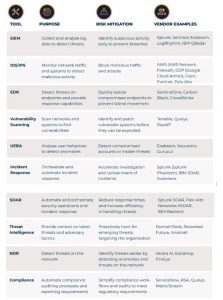
Test your responses
Regularly carrying out simulated cyberattacks will help your SOC team proactively identify areas for improvement so that responses can be enhanced before they’re needed. We recommend:
- Tabletop exercises: Beyond basic scenarios, design progressive complexity with unexpected injects and time pressure. Include executives to test communication channels and decision authority.
- Purple teaming: Rather than traditional red vs. blue exercises, consider collaborative purple team sessions where defenders work alongside ethical hackers, fostering knowledge transfer and accelerating defensive improvements.
- Automated breach and attack simulation (BAS): Deploy tools that continually test controls against the latest TTPs, providing metrics-based validation of security posture between manual exercises.
Implementation Best Practices
- Testing cadence: Comprehensive exercises quarterly, targeted simulations monthly, automated testing continuously. Scale frequency with your threat profile and regulatory requirements.
- Building your testing team: Designate a dedicated exercise designer separate from responders. Consider rotating SOC analysts into this role to broaden perspective and prevent testing predictability.
- Measurement framework: Track mean time to detect/respond, false positive rates, and communication effectiveness. Compare metrics against industry benchmarks and your historical performance.
- Integration with threat intelligence: Design scenarios based on threats targeting your sector. Use MITRE ATT&CK to ensure coverage across the full attack lifecycle.
- Third-party involvement: Include key vendors and partners in exercises annually to test integration points and shared response protocols.
The most effective programs make testing part of operational rhythm rather than separate events, creating a continuous improvement cycle that evolves with the threat landscape.
Advanced SOC Performance Measurement
Beyond basic tracking, effective SOC measurement requires a sophisticated framework that drives meaningful improvement and demonstrates security value to leadership. Here are some metrics you might want to consider:
- Quality-adjusted response time: Weight MTTR by incident severity and potential impact, preventing teams from prioritising quick wins over critical threats.
- Detection gap analysis: Measure coverage across the kill chain to identify blind spots in your security controls. Track the percentage of MITRE ATT&CK techniques your SOC can reliably detect.
- Automation effectiveness ratio: Measure incidents resolved through automation versus human intervention, with target ratios that evolve as your SOC matures.
- Risk reduction metrics: Quantify how SOC activities directly reduce organisational risk exposure through prevention, containment and remediation.
- Business alignment indicators: Track metrics that matter to executives – operational downtime prevented, compliance maintenance, and security’s contribution to business enablement
Implementation Approaches
Balanced scorecard methodology: Implement a SOC scorecard balancing operational metrics, team development, business alignment, and future capability building.
Predictive analytics: Move beyond reactive measurement to forecasting models that anticipate staffing needs and emerging threat patterns.
Contextual benchmarking: Compare metrics against industry peers with similar threat profiles rather than generic standards.
Economic frameworks: Adopt FAIR (Factor Analysis of Information Risk) or similar models to express security outcomes in financial terms that resonate with business leaders.
Continuous feedback loops: Create mechanisms where metrics directly inform adjustments to detection rules, response playbooks, and resource allocation in near real-time.
The most mature SOCs integrate operational metrics with business outcomes to demonstrate security’s contribution to organisational resilience and competitive advantage.
Automate!
Many of the routine tasks involved in detecting, investigating, and responding to security incidents can be automated. These are just a few you can get started with:
- Alert triage and prioritisation: Automation tools can be used to triage and prioritise security alerts without the need for manual intervention. Prioritisation is based on pre-defined indicators of severity, allowing your SOC team to tailor the triaging process according to the needs of the business, and helping analysts focus on the most critical incidents.
- Incident investigation and response: Orchestration tools allow teams to automate the investigation of and response to security incidents. This means SOC analysts can quickly get to the bottom of potential threats and issue a response without manual intervention, vastly increasing the number of events that can be addressed and improving overall security.
- Threat intelligence integration: Modern businesses have huge numbers of data streams at their disposal, but integrating all of these with your SOC can be challenging. Automation can be used to incorporate threat intelligence feeds into the SOC’s detection and response processes, allowing analysts to identify and respond to emerging threats more quickly across a much broader section of your environment.
- Vulnerability management: Automation tools can be used to automatically scan and identify vulnerabilities within the organisation’s systems and applications, removing the potential for human error and massively increasing the footprint you can cover. Businesses can also take this process a step further by using orchestration tools to automate the patching and remediation of any vulnerabilities that are detected.
- Compliance monitoring: Compliance is complex, but SOC teams can make sure nothing is out of order by automating compliance monitoring. Autonomous tools can monitor the environment with the latest regulatory requirements and security policies in mind, alerting SOC analysts to any violations or non-compliant behaviours before they become a larger, more legally challenging issue.
- Reporting: Often a recurring, repetitive, and manual task, reporting is the perfect candidate for automation. Using automation tools, SOC teams can generate consistent reports and compare metrics on SOC performance, providing valuable insights into the effectiveness of operations.
Keeping your SOC at peak performance is an ongoing process that requires dedication, resources, and strategic planning. By following these recommendations and regularly reassessing your capabilities, you’ll build a security operations function that can effectively defend against today’s sophisticated cyber threats while preparing for tomorrow’s challenges.
Looking for more information or support on improving the maturity of your SOC? Get in touch for call with our SOC experts to discuss more.